The Olympic Games are among the most prestigious sporting events in the world, and ice hockey holds a special place in this global celebration of athleticism. A critical element that adds to the excitement of the Olympic hockey tournament is the Olympic hockey bracket. This bracket is the roadmap of the competition, showing the progression of teams from the preliminary rounds to the final showdown for the gold medal. Understanding how the Olympic hockey bracket works can enhance your appreciation of the game and make following the tournament more thrilling.
The Olympic hockey bracket is not just a visual guide—it represents the tournament structure, determining which teams face off at different stages and how the winners advance. In essence, it is a blueprint for both teams and fans, illustrating the path toward Olympic glory. Each match in the bracket has high stakes, as a loss can mean elimination or the need to fight through additional rounds to reach the finals.
The structure of the Olympic hockey bracket varies slightly depending on whether it is the men’s or women’s tournament and the total number of participating teams. However, the fundamental principles remain consistent: teams compete in group stages, followed by knockout rounds, culminating in the medal games. By exploring these stages in detail, one can better understand the mechanics of the Olympic hockey bracket and the strategies teams employ.
Group Stage in the Olympic Hockey Bracket
The first phase in the Olympic hockey bracket is typically the group stage. Teams are divided into groups, usually based on world rankings and regional considerations. Each team plays every other team in its group in a round-robin format. The purpose of the group stage is to determine which teams advance to the knockout rounds. Performance here is critical, as it often affects seeding and matchups in the elimination rounds.
During the group stage, the Olympic hockey bracket may seem simple, but it involves careful planning. Teams aim to secure points through wins and sometimes draws, depending on the tournament’s point system. A strong performance ensures a favorable position in the next phase of the bracket, giving teams a potentially easier path to the medal rounds. Conversely, a poor performance can result in a more challenging route or early elimination.
Group stage matches are often full of surprises. Underdog teams sometimes pull off stunning upsets, altering the dynamics of the bracket and creating new opportunities for other competitors. This unpredictability is part of what makes following the Olympic hockey bracket so engaging for fans worldwide.
Knockout Rounds in the Olympic Hockey Bracket
After the group stage, teams progress to the knockout rounds, where the Olympic hockey bracket takes on a more dramatic shape. The knockout phase is straightforward in theory: lose, and you are out; win, and you move closer to the medal games. This sudden-death aspect adds immense pressure on the athletes, making every match intense and competitive.
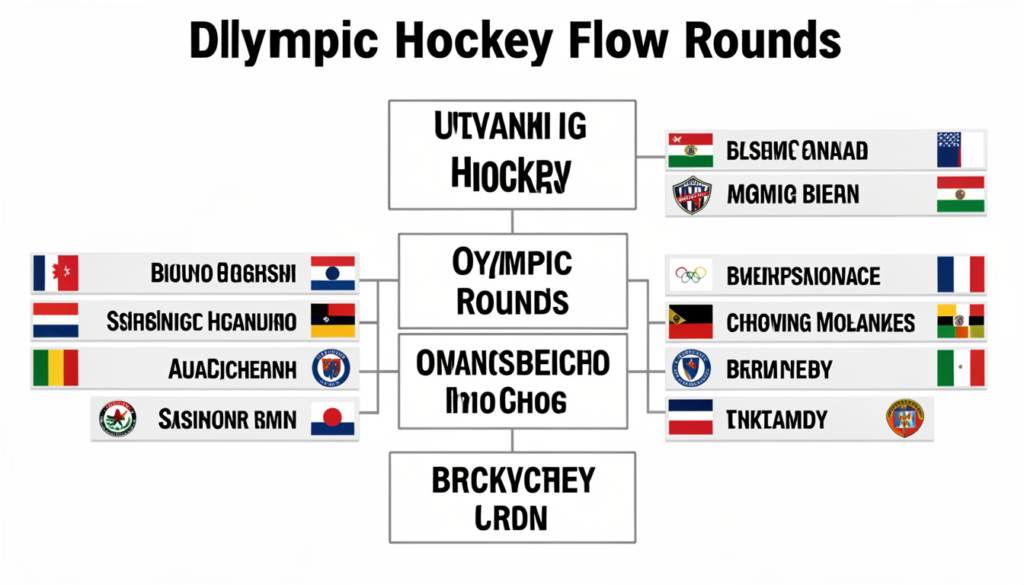
The structure of the knockout rounds varies but typically includes quarterfinals, semifinals, and then the gold and bronze medal matches. The Olympic hockey bracket visually represents these stages, allowing fans to see potential matchups and anticipate thrilling encounters. Each round halves the number of contenders, heightening the stakes and intensifying the excitement of the competition.
One key aspect of the knockout rounds is how teams are matched based on their group stage performance. Higher-seeded teams often face lower-seeded ones, theoretically rewarding strong group stage results with a potentially easier path forward. However, as history has shown, no outcome is guaranteed, and every match can redefine the bracket.
Seeding and Placement in the Olympic Hockey Bracket
Seeding is a fundamental component of the Olympic hockey bracket. It determines the position of teams within the bracket and influences potential matchups. The purpose of seeding is to ensure a balanced and fair tournament, preventing top teams from facing each other too early while giving underdogs a chance to advance.
Seeding is usually based on international rankings, previous Olympic performance, and results from qualification tournaments. Once seeded, teams are placed into the bracket according to a predetermined structure. The arrangement ensures that if the higher-ranked teams win their matches, they will meet in the later stages, ideally in the semifinals or finals.
Placement within the bracket also influences strategic considerations for teams. Coaches may adjust lineups, rest key players, or prioritize certain matches to optimize their position and preserve energy for critical knockout games. Understanding seeding and placement helps fans appreciate the tactical depth of Olympic hockey beyond just the physical play on the ice.
The Importance of the Olympic Hockey Bracket for Fans
The Olympic hockey bracket is more than just a technical tool; it is also an essential resource for fans. By consulting the bracket, fans can track their favorite teams, anticipate matchups, and plan viewing schedules. It adds a layer of engagement, making the tournament easier to follow and more enjoyable.
Fans often use the bracket to predict outcomes, discuss potential surprises, and celebrate victories. Social media platforms frequently feature bracket challenges, where enthusiasts forecast winners of each stage. These activities increase fan involvement and make the Olympic hockey bracket a central element of the viewing experience.
For international audiences, the bracket also provides clarity in tournaments with multiple time zones and broadcast schedules. Knowing when each match will occur and who is competing helps fans stay connected to the action in real-time, regardless of where they are watching from.
Strategies for Following the Olympic Hockey Bracket
To get the most out of the Olympic hockey bracket, fans should adopt a few strategies. First, familiarize yourself with the tournament format, including the number of groups, the progression rules, and seeding details. This foundational knowledge allows for a better understanding of how teams advance.
Second, keep track of team performance in both group and knockout stages. Observing trends, such as which teams have strong defenses or high-scoring forwards, can enhance predictions about the bracket’s outcomes. It also makes watching games more engaging, as fans can analyze strategy rather than just scoring.
Third, use online resources to view updated brackets. Websites, apps, and official Olympic channels often provide real-time updates, ensuring that fans have the most accurate information. Interactive brackets sometimes allow users to simulate different outcomes, adding another layer of excitement to the tournament experience.
The Evolution of the Olympic Hockey Bracket
The Olympic hockey bracket has evolved over the decades. Early tournaments were simpler, with fewer teams and straightforward elimination rules. Modern Olympic hockey brackets are more complex, reflecting the growing number of participating countries and the need for fair competition.
Advancements in broadcasting, technology, and tournament management have made brackets more accessible and user-friendly. Today, fans can follow interactive brackets online, track statistics, and even engage in predictive games. These changes have transformed the Olympic hockey bracket from a basic organizational tool into a central aspect of the fan experience.
Moreover, the evolution of the bracket reflects the globalization of ice hockey. As more nations compete at a high level, the bracket becomes a showcase of international talent and diversity, making the Olympic Games a true celebration of global sportsmanship.
Conclusion
The Olympic hockey bracket is an essential part of the tournament, providing structure, clarity, and excitement for both teams and fans. From the group stages to the knockout rounds, the bracket visually represents the journey toward Olympic medals. Understanding the bracket allows fans to follow the competition more closely, anticipate thrilling matchups, and appreciate the strategy behind team performances. As the Olympic Games continue to grow and evolve, the hockey bracket remains a symbol of competition, organization, and the unpredictability that makes sports so captivating.
Frequently Asked Questions (FAQs)
What is an Olympic hockey bracket?
An Olympic hockey bracket is a visual representation of the tournament structure, showing the matchups, progression, and potential paths for teams from the initial rounds to the medal games.
How are teams placed in the Olympic hockey bracket?
Teams are placed based on seeding, which considers world rankings, previous performances, and qualification results. Seeding helps ensure a balanced and fair tournament.
What are the stages of the Olympic hockey bracket?
The bracket typically includes group stages, knockout rounds (quarterfinals, semifinals), and medal matches (gold and bronze).
Can the Olympic hockey bracket predict winners?
While the bracket shows possible matchups, actual outcomes depend on team performance. Upsets and surprises are common, making predictions uncertain.
Where can I view the official Olympic hockey bracket?
Official Olympic websites, sports apps, and broadcasting platforms provide updated and interactive brackets for fans to follow in real-time.