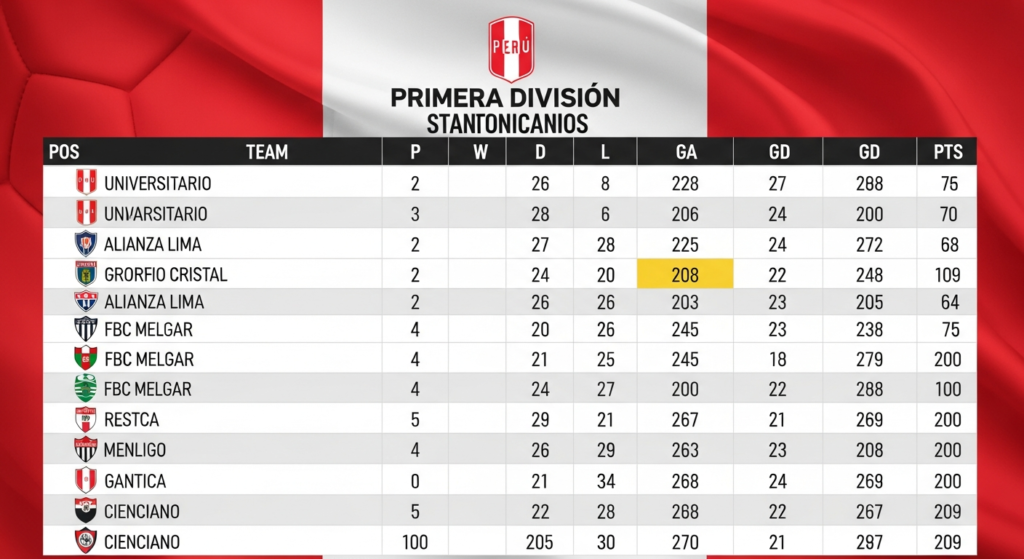
The Peruvian Primera División, also known as Liga 1, is the top professional football league in Peru. Since its foundation in 1912, the league has grown in prominence and has produced some of the most exciting football in South America. Understanding the standings in the Peruvian Primera División is crucial for fans, analysts, and sports enthusiasts who want to track the performance of their favorite teams and follow the league’s progress throughout the season.
The league operates on a points system similar to most football leagues around the world. Teams earn three points for a win, one point for a draw, and no points for a loss. The standings are determined based on the total points accumulated, with goal difference and goals scored used as tiebreakers when necessary. The league also includes promotion and relegation, which adds an extra layer of excitement to the standings as teams battle to stay in the top tier.
In addition to being a measure of a team’s success over the course of a season, the standings also influence qualification for international competitions such as the Copa Libertadores and Copa Sudamericana. Therefore, the Peruvian Primera División standings carry significant weight not just domestically, but also on the continental stage.
How the Standings Work
The standings in the Peruvian Primera División reflect the overall performance of each team in the league. Each season, teams compete against each other in home and away matches, striving to collect as many points as possible. The league table is updated regularly to show each team’s position based on the points they have earned.
Several factors influence the standings:
- Wins and Draws: Every match outcome directly affects the team’s total points.
- Goal Difference: The difference between goals scored and goals conceded can serve as a tiebreaker when teams have equal points.
- Goals Scored: In some cases, the total number of goals scored is used to differentiate teams with the same points and goal difference.
- Head-to-Head Records: Some seasons may use head-to-head results between tied teams to finalize rankings.
The combination of these factors makes the league standings a dynamic and essential aspect of the competition. Fans constantly monitor the table to gauge their team’s performance, plan for upcoming matches, and anticipate playoff or relegation scenarios.
Top Teams in the League
The Peruvian Primera División has seen the dominance of several clubs over the years. Some teams consistently compete for the top positions in the standings, making them perennial favorites for the league title.
- Alianza Lima: One of the most successful and historic clubs in Peru, often appearing near the top of the standings.
- Universitario de Deportes: Another legendary club with a strong record in the league, known for its passionate fanbase.
- Sporting Cristal: A club recognized for its consistency and competitive edge in the league, frequently securing a spot in the upper half of the table.
- Melgar: A team that has gradually risen in prominence and can challenge the traditional powerhouses.
- Ayacucho FC: Known for producing competitive performances that sometimes see them climbing the standings unexpectedly.
These teams not only aim for the league title but also for qualification into international tournaments. Their position in the standings is often a reflection of both their strategic planning and consistency throughout the season.
Mid-Table Battles
The middle section of the Peruvian Primera División standings is often crowded with teams striving for better positions. These clubs may not consistently compete for the title, but their performance is crucial for avoiding relegation and securing mid-table stability.
- Cienciano: Often found in the mid-table, balancing between ambition and maintaining league status.
- Binacional: A club with fluctuating performances that occasionally surprises higher-ranked teams.
- UTC Cajamarca: A consistent presence in the league, often securing points that keep them comfortably mid-table.
- Carlos A. Mannucci: Striving for better positions while avoiding the threat of relegation.
Mid-table standings are interesting because they often reflect the unpredictability of the league. A few wins or losses can dramatically change a team’s position, making the league competitive even outside the top and bottom tiers.
Relegation Zone
At the bottom of the standings, teams face the threat of relegation to the Peruvian Segunda División. These teams often struggle with consistency and may have fewer resources compared to the league’s top clubs. Relegation battles add intense pressure, as staying in the top division is crucial for financial stability and club reputation.
- Sport Boys: Often fighting to avoid dropping into the lower division.
- Carlos Stein: A club that has faced relegation battles in recent seasons.
- Atlético Grau: Frequently positioned in the lower half of the standings, striving to secure points.
- Academia Cantolao: A team that fights hard in every season to maintain their Primera División status.
The relegation zone makes the standings highly dynamic. Fans of struggling teams closely monitor this section, knowing that every match can have significant consequences for their club.
Importance of Standings for Fans and Analysts
The Peruvian Primera División standings are not just a measure of points—they tell a story. For fans, the table is a source of excitement, hope, and sometimes disappointment. It shows the journey of their favorite team, highlighting successes, challenges, and rivalries.
For analysts, the standings are an essential tool for evaluating team performance, predicting outcomes, and understanding the tactical trends of the league. Metrics such as points per game, goal difference, and head-to-head results are derived from the standings and are crucial for a comprehensive analysis of the competition.
Trends in Recent Seasons
Recent seasons of the Peruvian Primera División have shown several interesting trends in the standings:
- A mix of traditional clubs and emerging teams competing for top positions.
- Tight relegation battles where small differences in points decide the fate of teams.
- Increasing competitiveness in mid-table positions, making the league more unpredictable.
- Greater influence of goal difference in determining final rankings due to closely matched teams.
These trends emphasize that the standings are never static and can change dramatically even in the final weeks of the season.
How to Follow the Standings
Fans can follow the Peruvian Primera División standings through multiple platforms:
- Official League Website: Offers the most accurate and up-to-date table.
- Sports News Websites: Provide analysis, match previews, and post-match standings updates.
- Mobile Apps: Apps dedicated to football allow fans to track their team’s position in real time.
- Social Media: Clubs and sports journalists frequently update standings after each matchday.
Tracking the standings in real time allows fans to engage with the league more closely and increases the excitement surrounding each matchday.
Conclusion
The Peruvian Primera División standings are more than just numbers—they reflect the triumphs, struggles, and ambitions of the clubs competing in one of South America’s most historic football leagues. From the top teams vying for the championship to the mid-table clubs fighting for stability and the bottom teams battling relegation, every position in the standings carries significance.
Whether you are a devoted fan, a football analyst, or a casual observer, keeping track of the standings provides insight into the competitive nature of the league and helps you understand the story behind each season. Following the Peruvian Primera División standings allows you to appreciate the league’s drama, the excitement of its matches, and the passion of its supporters across the country.